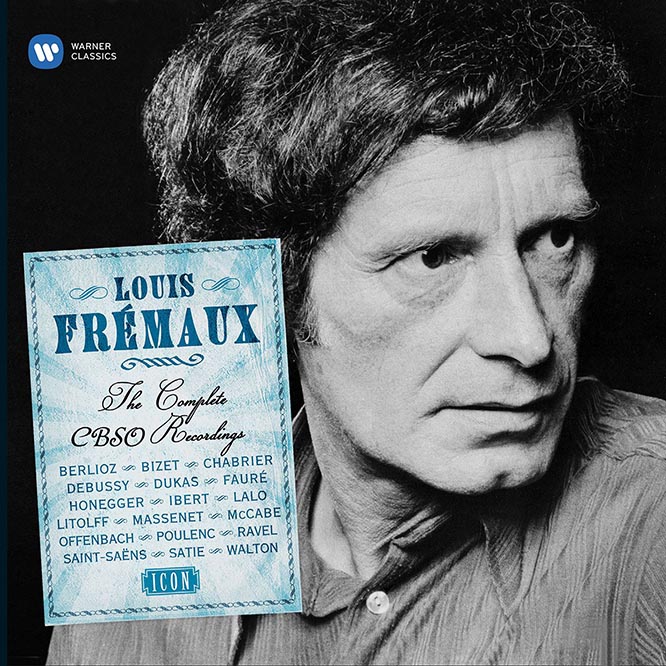
| “This 12-CD set assembles, for the first time, all the recordings that the French conductor Louis Frémaux made (for EMI) with the City of Birmingham Symphony Orchestra during his tenure as its Principal Conductor (1969-1978). These recordings helped to build the CBSO’s international reputation before the arrival of Simon Rattle as its Principal Conductor in 1980. This 12-CD set joins Warner Classics’ Icon series, which pays homage to some of the greatest recording artists of the recent past. The box is devoted to the French conductor Louis Frémaux, who, from 1969 to 1978, preceded Simon Rattle as Principal Conductor of the City of Birmingham Symphony Orchestra. For the first time, it assembles all the recordings that Frémaux and the CBSO made for EMI. Over the course of the 1970s their discography played a substantial role in building the orchestra’s international reputation before the arrival of Rattle as its Principal Conductor in 1980. Indeed, such was the orchestra’s prowess in the French music favoured by Frémaux that, in 1978, Rattle described the CBSO as “the best French orchestra in the world”. Louis Frémaux, now 95, was born in northern France. He attended the conservatory of Valenciennes, but his studies were interrupted by World War II. Too young to join the army, he became involved in the Resistance, and at the end of the War he joined the French Foreign Legion, serving in Vietnam. In 1947 he entered the Paris Conservatoire, where he studied conducting with Louis Fourestier, going on to win the institution’s first prize for conducting in 1952. He launched his recording career with the Erato label, and a notable success was the Requiem by the Baroque composer Jean Gilles, which won the Grand Prix du Disque in 1956, the year Frémaux began his nine-year tenure as Chief Conductor of the Monte Carlo Opera Orchestra. He first conducted the City of Birmingham Symphony Orchestra in 1968 and became its Principal Conductor the following year. The CBSO’s history had been somewhat chequered, despite attracting such principal conductors as Adrian Boult and Andrzej Panufnik, but Frémaux groomed the orchestra, taking it to a new level. While the team gained special renown for its performances of French repertoire, it also sustained a strong reputation in the works of modern British composers. The vast majority of this Icon set is devoted to French music: Berlioz (notably the Grande Messe des Morts, the first recording project of the CBSO Chorus, which Frémaux established in 1973); Massenet; Bizet (including his rarely-heard symphonic suite Roma); Lalo; Saint-Saëns (including the Symphony No 3, a work closely associated with Frémaux); Fauré (the Requiem); Chabrier; Debussy; Dukas; Ravel; Ibert (whose music occupies almost an entire CD); Honegger; Poulenc (the Gloria, Piano Concerto and Les Biches) and Satie. The British-born composers featured are: Litolff; Walton (who occupies an entire CD, dominated by the two Façade suites), and John McCabe (1939-2015), whose Notturni was premiered by Frémaux and the CBSO in 1970.
Appearing for the first time on CD is a selection of arias by Leoncavallo, Puccini, Bizet, Sullivan, Lehár and Johann Strauss II, sung in English by the tenor by the Birmingham-born tenor David Hughes (1929-1972), who, before turning to opera, had enjoyed success as a popular singer; the arias are complemented by overtures by Offenbach. Other soloists appearing on the set include tenor Robert Tear, cellist Paul Tortelier and pianists John Ogdon and Cristina Ortiz.
01. Grande Messe des morts, Op. 5, H. 75 I. Requiem et Kyrie (Introitus)
02. Grande Messe des morts, Op. 5, H. 75 II. Dies Irae – Tuba mirum
03. Grande Messe des morts, Op. 5, H. 75 III. Quid sum miser
04. Grande Messe des morts, Op. 5, H. 75 IV. Rex tremendae majestatis
05. Grande Messe des morts, Op. 5, H. 75 V. Quaerens me
06. Grande Messe des morts, Op. 5, H. 75 VI. Lacrymosa
07. Grande Messe des morts, Op. 5, H. 75 VII. Offertorium
08. Grande Messe des morts, Op. 5, H. 75 VIII. Hostias
09. Grande Messe des morts, Op. 5, H. 75 IX. Sanctus
10. Grande Messe des morts, Op. 5, H. 75 X. Agnus Dei
11. Le Carnaval romain, Op. 9, H. 95 Overture
12. Tristia Op. 18, H. 119 III. Marche funèbre pour la dernière scène d’Hamlet, H. 103
13. La Damnation de Faust, Op. 24, H. 111 I. Marche hongroise
14. La Damnation de Faust, Op. 24, H. 111 II. Danse des sylphes
15. La Damnation de Faust, Op. 24, H. 111 III. Menuet des follets
16. Benvenuto Cellini, H. 76b Grande Ouverture
17. Les Troyens, Op. 29, H. 133, Act 4 No. 29 Chasse royale et orage
18. Les Troyens, Op. 29, H. 133, Act 1 No. 11 Marche troyenne
19. Le Cid I. Castillane
20. Le Cid II. Andalouse
21. Le Cid III. Aragonaise
22. Le Cid IV. Aubade
23. Le Cid V. Catalane
24. Le Cid VI. Madrilène
25. Le Cid VII. Navarraise
26. Suite No. 4, Scènes pittoresques I. Marche
27. Suite No. 4, Scènes pittoresques II. Air de ballet
28. Suite No. 4, Scènes pittoresques III. Angélus
29. Suite No. 4, Scènes pittoresques IV. Fête bohême
30. La Vierge Le Dernier Sommeil de la Vierge
31. Roma, WD 37 I. Une chasse dans la Forêt d’Ostie – Andante tranquillo – Andante
32. Roma, WD 37 II. Scherzo – Allegretto vivace
33. Roma, WD 37 III. Une procession – Andante molto
34. Roma, WD 37 IV. Carnaval à Rome – Allegro vivacissimo
35. Symphonie espagnole in D Minor, Op. 21 I. Allegro non troppo
36. Symphonie espagnole in D Minor, Op. 21 II. Scherzando
37. Symphonie espagnole in D Minor, Op. 21 III. Intermezzo (Allegretto non troppo)
38. Symphonie espagnole in D Minor, Op. 21 IV. Andante
39. Symphonie espagnole in D Minor, Op. 21 V. Rondo (Allegro)
40. Cello Concerto in D Minor I. Prélude – Lento – Allegro maestoso
41. Cello Concerto in D Minor II. Intermezzo – Andantino con moto
42. Cello Concerto in D Minor III. Introduction – Andante – Allegro vivace
43. Cello Concerto No. 1 in A Minor, Op. 33 I. Allegro non troppo
44. Cello Concerto No. 1 in A Minor, Op. 33 II. Allegretto con moto
45. Cello Concerto No. 1 in A Minor, Op. 33 III. Allegro non troppo
46. Symphony in C Major, WD 33 I. Allegro vivo
47. Symphony in C Major, WD 33 II. Adagio
48. Symphony in C Major, WD 33 III. Scherzo – Allegro
49. Symphony in C Major, WD 33 IV. Finale – Allegro vivace
50. Symphony No. 3 in C Minor, Op. 78, Organ I. Adagio – Allegro moderato
51. Symphony No. 3 in C Minor, Op. 78, Organ II. Poco adagio
52. Symphony No. 3 in C Minor, Op. 78, Organ III. Allegro moderato – Presto
53. Symphony No. 3 in C Minor, Op. 78, Organ IV. Maestoso – Allegro
54. Concerto Symphonique No. 4 in D Minor, Op. 102 II. Scherzo
55. Requiem, Op. 48 I. Introit et Kyrie
56. Requiem, Op. 48 II. Offertoire
57. Requiem, Op. 48 III. Sanctus
58. Requiem, Op. 48 IV. Pie Jesu
59. Requiem, Op. 48 V. Agnus Dei
60. Requiem, Op. 48 VI. Libera Me
61. Requiem, Op. 48 VII. In Paradisum
62. Cantique de Jean Racine, Op. 11
63. Ballade, Op. 19
64. Le Carnaval des animaux, R. 125 I. Introduction et Marche royale du lion
65. Le Carnaval des animaux, R. 125 II. Poules et coqs
66. Le Carnaval des animaux, R. 125 III. Hémiones (ou Animaux véloces)
67. Le Carnaval des animaux, R. 125 IV. Tortues
68. Le Carnaval des animaux, R. 125 V. L’éléphant
69. Le Carnaval des animaux, R. 125 VI. Kangourous
70. Le Carnaval des animaux, R. 125 VII. Aquarium
71. Le Carnaval des animaux, R. 125 VIII. Personnages à longues oreilles
72. Le Carnaval des animaux, R. 125 IX. Le Coucou au fond des bois
73. Le Carnaval des animaux, R. 125 X. Volière
74. Le Carnaval des animaux, R. 125 XI. Pianistes
75. Le Carnaval des animaux, R. 125 XII. Fossiles
76. Le Carnaval des animaux, R. 125 XIII. Le Cygne
77. Le Carnaval des animaux, R. 125 XIV. Final
78. Le Carnaval des animaux, R. 125 XIII. Le Cygne
79. 6 études, Op. 52 No. 6 Caprice, d’après l’étude en forme de valse (Arr. E. Ysa?e for Violin and Orchestra)
80. Le Déluge, Op. 45 Prélude
81. Wedding Cake in A-Flat Major, Op. 76
82. Allegro appassionato in B Minor, Op. 43
83. Danse macabre, Op. 40
84. Espa?a
85. Prélude à l’après-midi d’un faune, L. 86
86. L’Apprenti sorcier
87. Boléro, M. 81
88. Divertissement I. Introduction – Allegro vivo
89. Divertissement II. Cortège – Moderato molto – Animato subito
90. Divertissement III. Nocturne – Lento
91. Divertissement IV. Valse – Animato assai
92. Divertissement V. Parade – Tempo di marcia
93. Divertissement VI. Finale – Quasi cadenza – Vivo (Tempo di galop)
94. Symphonie marine
95. Bacchanale
96. Louisville-concert
97. Bostoniana
98. Pacific 231, H. 53
99. Gloria, FP 177 I. Gloria in excelsis deo
100. Gloria, FP 177 II. Laudamus te
101. Gloria, FP 177 III. Domine Deus
102. Gloria, FP 177 IV. Domine fili unigenite
103. Gloria, FP 177 V. Domine Deus, Agnus Dei
104. Gloria, FP 177 VI. Qui sedes ad dexteram Patris
105. Piano Concerto, FP 146 I. Allegro assai
106. Piano Concerto, FP 146 II. Andante con moto
107. Piano Concerto, FP 146 III. Rondeau à la fran?aise – Presto giocoso
108. Les Biches, FP 36b I. Rondeau – Très lent – Subito allegro molto
109. Les Biches, FP 36b II. Adagietto
110. Les Biches, FP 36b III. Rag-Mazurka – Presto
111. Les Biches, FP 36b IV. Andantino
112. Les Biches, FP 36b V. Final – Presto
113. 3 Gymnopédies (Orch. Debussy) No. 1 Lent et grave
114. 3 Gymnopédies (Orch. Debussy) No. 3 Lent et douloureux
115. Fa?ade, Suite No. 2 No. 1 Fanfare
116. Fa?ade, Suite No. 2 No. 2 Scotch Rhapsody
117. Fa?ade, Suite No. 1 No. 2 Valse
118. Fa?ade, Suite No. 1 No. 4 Tango-Pasodoble
119. Fa?ade, Suite No. 1 No. 3 Swiss Jodelling Song
120. Fa?ade, Suite No. 2 No. 3 Country Dance
121. Fa?ade, Suite No. 1 No. 1 Polka
122. Fa?ade, Suite No. 2 No. 4 Noche espagnole
123. Fa?ade, Suite No. 2 No. 5 Popular Song
124. Fa?ade, Suite No. 2 No. 6 Old Sir Faulk
125. Fa?ade, Suite No. 1 No. 5 Tarantella – Sevillana
126. Gloria
127. Orb and Sceptre
128. Coronation Te Deum
129. Crown Imperial
130. The Wise Virgins I. What God Hath Done Is Rightly Done – Vivace assai (from Was Gott tut, das ist wohlgetan, BWV 99)
131. The Wise Virgins II. Lord, Hear My Longing
132. The Wise Virgins III. See What Love Can Do
133. The Wise Virgins IV. Ah! How Ephemeral
134. The Wise Virgins V. Sheep May Safely Graze
135. The Wise Virgins VI. Praise Be To God
136. Notturni ed alba I. Hymnus Ante Somnum – Andante
137. Notturni ed alba II. Phantoms – Vivo
138. Notturni ed alba III. Te Vigilans Oculis – Lento
139. Notturni ed alba IV. Somnia – Agitato
140. Notturni ed alba V. Alba – Lento
141. Symphony No. 2 I. Vivo
142. Symphony No. 2 II. Andante
143. Symphony No. 2 III. Allegrissimo
144. Symphony No. 2 IV. Lento
145. Symphony No. 2 V. Vivo
146. Pagliacci, Act 1 To act!… On with the motley (Recitar!… Vesti la giubba) [Canio]
147. La Bohème, Act 1 Your tiny hand is frozen (Che gelida manina) [Rodolfo]
148. Carmen, WD 31, Act 2 See how the flower (La fleur que tu m’avais jetée) [Don José]
149. La Jolie Fille de Perth, WD 15, Act 2 Hear the voice (à la voix d’un amant fidèle) [Smith]
150. Tosca, Act 3 When the stars were brightly shining (E lucevan le stelle) [Mario Cavaradossi]
151. Turandot, Act 3 None shall sleep tonight (Nessun dorma) [Calaf]
152. The Gondoliers, Act 2 Take a pair of sparkling eyes (Marco)
153. Paganini, Act 2 Girls were made to love and kiss (Gern hab’ ich die Frau’n geküsst) [Paganini]
154. Frasquita, Act 2 When the moon is shining white (Hab’ ein blaues Himmelbett) [Frasquita]
155. Frederica, Act 2 O maiden, my maiden (O M?dchen, mein M?dchen) [Friederike]
156. Eine Nacht in Venedig, Act 1 Love, I am here (Komm’ in die Gondel) [Duke]
157. The Land of Smiles, Act 2 You are my heart’s delight (Dein ist mein ganzes Herz!) [Sou-Chong]
158. Orphée aux enfers Overture
159. La Grande Duchesse de Gérolstein Overture
160. La Belle Hélène Overture
161. Barbe-Bleue Overture
162. La Vie parisienne Overture
booklet.pdf |