
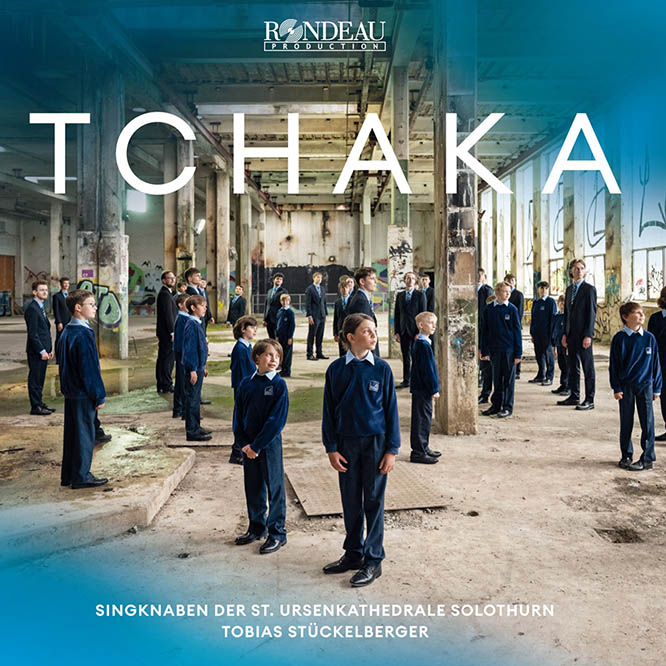
| “Tchaka” – this is a traditional stew from Haiti, and as in a good stew, the singing boys of St. Ursen Cathedral Solothurn under the direction of Tobias Stückelberger present a diverse mix of diverse musical influences and cultures, brought together on their new album. With their over 1200 years of tradition, the Singknaben are considered the oldest boy choir in Switzerland. Starting from their church tradition, the album begins with romantic motets and psalm tonings by Uěis Prauliņš, Felix Mendelssohn Bartholdy and Anton Bruckner, leads over some choral favourites such as Gabriel Fauré’s “Cantique de Jean Racine” to specially arranged edits of Swiss folk songs and solother. urner Liedgut such as the “Heimetvogel” and the male choral work “Terre Jurassienne”. It continues north with contemporary works from Estonia (Veljo Tormis) and Finland (Jaakko Mäntyjärvi and Mia Makaroff). In the editing of “The Code” by Nemo – as on the album itself – a variety of musical styles come together. The album closes with not always quiet farewell songs, including Franz Schubert’s “vocals of spirits over the waters,” set to music by the men’s voices and deep strings. The album impresses with the clever selection of works, which form a large thematic frame despite all the variety, and especially by the specially written, first recorded arrangements, with which the singing boys themselves contribute a piece to the choral tradition. ———————————— ‘Tchaka’ – that’s a traditional stew from Haiti, and just like in a good stew, the Singknaben of St. Ursen Cathedral Solothurn, under the direction of Tobias Stückelberger, present a diverse mixture of the most varied musical influences and cultures on their new album. With a tradition dating back over 1200 years, the Singknaben are considered the oldest boys’ choir in Switzerland. Starting from their church tradition, the album begins with romantic motets and psalm settings by Uếis Prauliņš, Felix Mendelssohn Bartholdy and Anton Bruckner, and leads through some choral favourites such as Gabriel Fauré’s ‘Cantique de Jean Racine’ to arrangements of Swiss folk songs and works from the Solothurn region such as as the ‘HeimBird of Home and the men’s choir work ‘Terre Jurassienne’. The programme continues northwards with contemporary works from Estonia (Veljo Tormis) and Finland (Jaakko Mäntyjärvi and Mia Makaroff). In the arrangement of ‘The Code’ by Nemo – as in the album itself – a wide variety of musical styles come together. The album closes with farewell songs that are not always peaceful, including Franz Schubert’s ‘vocals of spirits over the waters’, set to monumental music by the male voices and low strings. The album impresses with its clever selection of works, which, despite their diversity, form a large thematic framework, and especially with the specially written arrangements, recorded for the first time, with which the choirboys themselves contribute a piece to the choral tradition.
01 – Tchaka |
商城正版 高端厂牌 数字专辑
原生高解析数字专辑
信息量可达CD的6.5至512倍。
*384kHz及22.6MHz的高解析音频对设备要求较高
*其中45.2MHz的音频 单曲 可达3g,对存储介质也有较高需求
原生高解析数字专辑
信息量可达CD的6.5至512倍。
*384kHz及22.6MHz的高解析音频对设备要求较高
*其中45.2MHz的音频 单曲 可达3g,对存储介质也有较高需求
声明:本站所有文章,如无特殊说明或标注,均为本站原创发布。任何个人或组织,在未征得本站同意时,禁止复制、盗用、采集、发布本站内容到任何网站、书籍等各类媒体平台。如若本站内容侵犯了原著者的合法权益,可联系我们进行处理。